Nobody Is Explaining Politics Correctly
Most political content tells you what to think. Understanding political theory teaches you how to think.

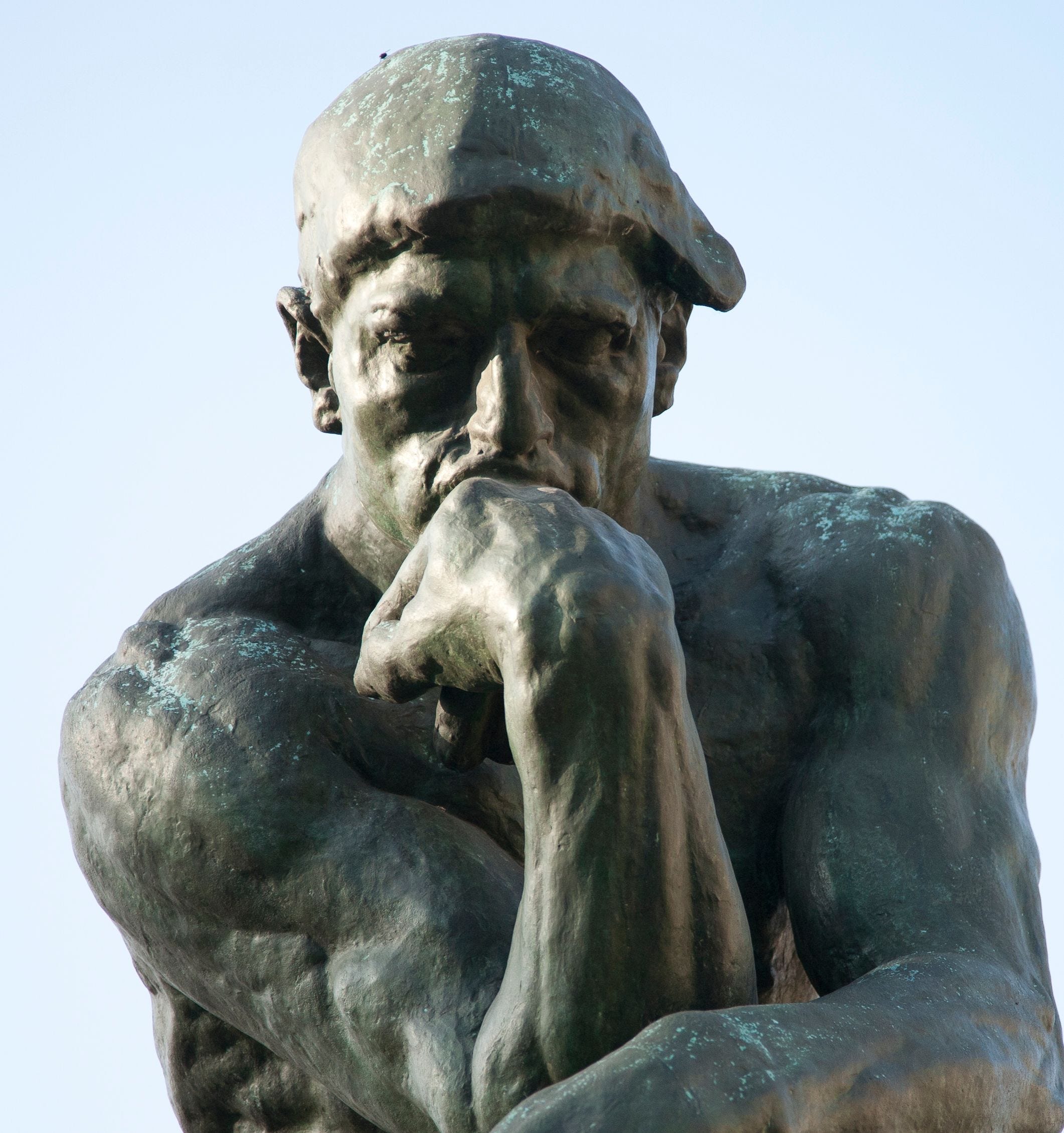
The Gap
If you click on cable news, it’ll tell you what’s going on, but only through the lens of whoever owns the network. Academic journals have the foundational ideas, but they’re written for other academics, wrapped in jargon that functions less like precision and more like a gate keeper.
The result is a massive gap between partisan commentary and high-level academia, and very few people are filling it successfully. I’m a lawyer who became more interested in the philosophy underneath the law than the law itself, and I am working on a solution to this gap.
How to Fill The Gap
Some may argue that filling the gap, in a personal sense, would mean doing more research. Which usually means going online. But they’ll quickly find that once they are online, they’re hit with an onslaught of information with no ability to sift through it all.

In reality, if you try to consume online content without a basic foundational understanding, you will quickly become overwhelmed. This is especially the case because most political content online follows the news cycle, which has a breaking story every twelve hours. It’s almost impossible to keep up with.
But if you step back for a second, you’ll find that most breaking stories follow a pattern that has existed for centuries. By that, I mean that most of the events, most of the debates, and most of the ideas have already happened or have already been discussed. So instead of being jerked around by the 24/7 news cycle, it makes more sense to take a step back and study the foundation of politics. If you do this, you’re equipped to understand what’s actually being debated the next time a breaking news headline hits your phone.
So, what’s the foundation of politics then? Well, it’s philosophy, of course. And the branch most relevant to understanding modern political debates is political theory, which is what we are focusing on.
This Matters Now More Than Ever
Understanding the foundation of modern political debates matters now more than ever in the “information era,” which is quickly turning into the “disinformation era.” What was once the democratization of information via the world wide web, has now become a chaotic mess of opinions, misinformation, propaganda, and occasionally some facts. And while we can all be thankful facts are included on that list, it’s unfortunately increasingly hard to discern truth from falsehoods.
One cannot combat this mess of mis/information by consuming more content. That’s equivalent to drinking from a firehose. The true solution is to educate yourself on the foundational ideas underneath the noise. It’s understanding why people believe what they believe, and why you believe what you believe. The goal is to read a sensationalized headline, pause, and assess the merits of the situation against your political theory knowledge.
Let me give you an example on a very controversial topic. How do you feel about Dobbs overturning Roe v. Wade? According to most political commentators, the question is: should abortion be legal? And while that’s part of the debate, it’s only a small sliver of it.
Because someone who understands political theory would ask:
• Should abortion be a state-determined right?
• How do I think the Constitution should be interpreted?
• Does stare decisis ever enshrine bad law? Is this one of those cases? Why or why not?
• What is a “right?”
And this is my goal for you. To hear a political claim and understand what’s actually being discussed. And then to take this knowledge and engage in educated conversations with those around you. So that we can, collectively, elevate our national political discourse.
The Solution
While I stated a general solution above, I am going to take it one step further. I am going to provide you the solution.
My short-form videos are part of the solution, but I am restricted by the three-minute cap. So, I am announcing my YouTube relaunch, where I’ll be getting into the nitty gritty on some of the most contentious topics of modern times, breaking down the political theory and philosophy essential in understanding politics, and providing educational content that gives you the knowledge to discuss these topics no matter who you’re talking to.
My goal here is not to tell you what to think. It’s to give you the freedom to think for yourself.
My first YouTube video goes live at 2 pm EST today (June 9th). Subscribe to keep updated on my future videos, which will be coming out every other week.
Although you probably have read them already, Philosopher Jason Brennan tackles a similar topic in his book "Against Democracy", identifying three types of people in their way to apprach reasoning: Hobbits, Hooligans and Vulcans. Similarly, Ilya Solin tackles this topic in "Democracy and Political ignorance", not to mention Bryan Caplan's "The myth of the rational voter".
I think this identifies the right gap. The missing layer is not merely more information, but intellectual discipline.
I would only add that academia is not free from the same problem. Education and intelligence do not automatically defeat bias; often they simply give bias a more sophisticated vocabulary.
Political theory matters because it gives us a framework deeper than the news cycle. But the deeper virtue is learning to interrogate our own premises: What am I assuming? What am I emotionally invested in? Would I still believe this if my side were not benefiting from it?
That is the difference between being informed and being intellectually free.